Tra i tanti annunci catastrofisti, spesso scorrelati da qualsiasi valore quantitativo, sulla morte dei blog, sulla fine del web 2.0 o sui licenziamenti in corso durante la crisi economica che stiamo vivendo, molti sembrano dimenticarsi il vero significato del fenomeno 2.0.
Proprio questo è stato uno dei temi più rilevanti discussi nella roundtable con Tim O’Reilly al Web 2.0 Expo di Berlino a cui ho partecipato insieme ad altri blogger da tutta Europa. Alcuni di questi spunti sono stati ripresi anche nel keynote di Tim, di cui trovate qualche dettaglio qui.
Aldilà di quello che piace scrivere ai giornalisti o a chi osserva in modo un pò superficiale il mondo della rete, Web 2.0 non ha mai significato una seconda versione del web, quanto una nuova concezione ed un nuovo ruolo di Internet nella vita di persone ed aziende. “Il Web 2.0 è lo spostamento verso la rete come piattaforma” ha detto O’Reilly e questo movimento piuttosto che sparire, sta esplodendo con sempre più applicazioni sviluppate facendo leva sulla collective intelligence:
Pensiamo ai trend dietro al web 2.0: internet come piattaforma, collective intelligence, data as intel inside, software above the level of a single device, software as a service. Questi grandi cambiamenti continueranno, indipendentemente dalla crisi economica.
Il web 2.0 è fatto non tanto dai contributi visibili ed espliciti della massa (gli user generated content), quanto da aziende capaci di veicolare nuovi servizi più intelligenti e monetizzabili facendo leva sugli effetti network, aggregando ogni interazione, anche implicita e minimale, con il mercato e riconfigurando in tempo reale il proprio business su queste indicazioni esattamente come Google ha fatto anni fa per l’advertising.
In questo senso il prototipo di azienda Enterprise 2.0 non è tanto Dell con IdeaStorm (sistema di innovazione aperta con clienti e non clienti), quanto WalMart:
…Web 2.0 is ultimately about understanding the rules of business in the network era… I define Web 2.0 as the design of systems that harness network effects to get better the more people use them, or more colloquially, as “harnessing collective intelligence.” This includes explicit network-enabled collaboration, to be sure, but it should encompass every way that people connected to a network create synergistic effects.
If there is only one thing that enterprises ought to learn about Web 2.0, it’s this one: building information systems that allow you to adjust in real time based on interaction with your customers is the true mark of a networked enterprise.
E come traguardare un simile shift nei modelli di produzione e gestione dell’azienda? Ancora dallo stesso post:
- Harvest every bit of user contribution, not just the explicit
- The era of IT as a back-office function is over. You must infuse your organization with IT, so that your supply chain responds every time a customer rings up an item at the cash register
- Web 2.0 thrives on network effects: data begetting more data, services getting better in such a way that they are used more often, until you are so far ahead of the next guy that he can’t catch up.
In questo senso O’Reilly parla di “turn your IT department inside out – or wait for some innovative startup to do it for you”. Il vantaggio competitivo nei business del futuro non sarà legato alla bontà del servizio (es. telefonia, prestito di denaro, etc), quanto alla reattività nel personalizzarlo raccogliendo ed aggregando più informazioni possibili sul cliente e sulla sua storia di utilizzo del servizio stesso. Questo è il futuro della Telco 2.0 o del Retail 2.0, piattaforme finalmente capaci di capitalizzare gli asset che già possiedono sui propri consumatori (frequenza e prodotti acquistati, lunghezza delle comunicazioni, destinatari chiamati più spesso, orari di utilizzo della fonia, etc) ed in grado di cambiare i propri processi automaticamente in una sorta di metaorganizzazione. Invece di progettare i flussi, il nostro lavoro consisterà sempre più nel disegnare i meccanismi di riconfigurazione ed evoluzione organica dell’azienda (chi ricorda il codice automodificante di qualche anno fa? :)).
Questi cambiamenti partono dal Web 2.0, ma producono impatti profondi e di lunga durata su tutta la società ad un ritmo che non accenna ad affievolirsi come suggerisce The Growth Of Social Technology Adoption di Forrester:
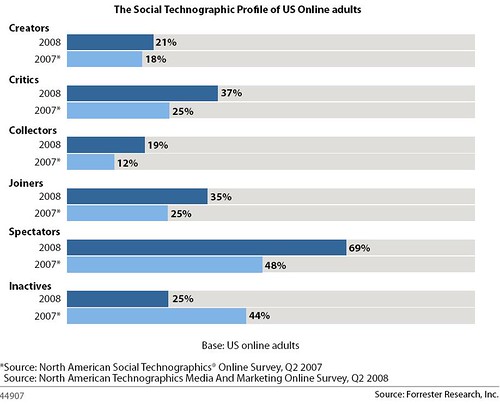
I social media stanno diventanto un fenomeno universale, in rapidissima crescita e non più scartabile come marginale per la società. Gli utenti online non toccati da questo processo inarrestabile sono scesi in un anno dal 44% al 25%, mentre quelli che consumano i contenuti generati dal basso passano dal 48% al 69%. Molto sono cresciuti anche quelli che caricano i contenuti (Creators dal 18 al 21% specialmente in Korea e China), hanno un ruolo attivo nei social network (Joiners), che commentano e riutilizzano (Critics) o semplicemente taggano i contributi (Collectors).
Smentendo tantissimi luoghi comuni, da dove viene questa crescita nella crescita dei contenuti online? Dal gruppo compreso tra i 35 e 54 anni! Questo semplice fatto significa che si stanno aprendo inediti e per molti inattesi spazi di marketing in ogni fascia del mercato e praticamente per ogni tipologia di prodotto.
Allora la crisi ucciderà il web 2.0? Credo piuttosto che il web 2.0, con i suoi costi ridotti e l’enorme reattività, sarà la base dei business che uccideranno la crisi.